
Many beginners believe they need to learn everything before they can become good at something. They watch many videos, read different books, join several courses, and try many new skills at the same time. At first, this feels exciting because they are learning many new ideas.
However, after some time, many beginners notice something surprising. Even though they spend many hours learning, they still do not feel skilled at anything. They know a little about many topics but cannot perform any of them well.
This is one of the biggest reasons beginners feel stuck. The problem is not a lack of effort. The problem is trying to learn too much at once.
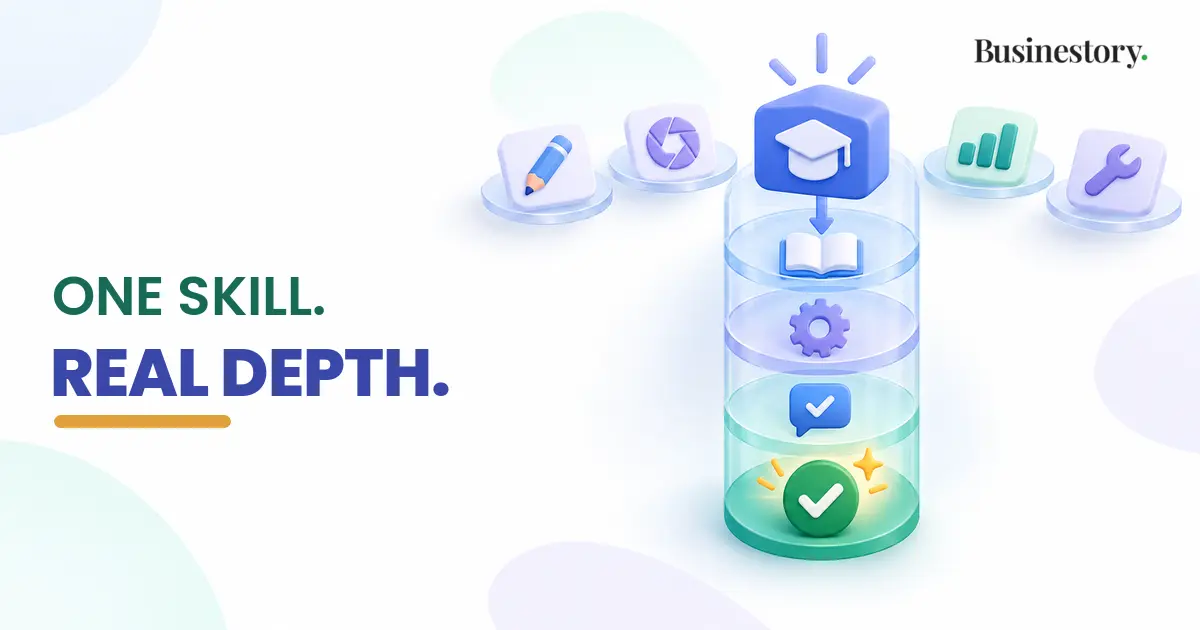
The truth is simple: learning one skill deeply is usually much better than learning many skills at the beginning.
Why Beginners Want to Learn Everything
Today, information is available everywhere. A beginner can find thousands of videos, articles, books, and online courses within minutes.
Because of this, many people think they should learn everything before they start practicing.
For example, someone who wants to become a graphic designer may try to learn Photoshop, Illustrator, Figma, animation, video editing, photography, drawing, web design, and 3D design all at once.
A beginner learning programming may try to study Python, JavaScript, C++, databases, cybersecurity, artificial intelligence, cloud computing, and mobile app development at the same time.
Although learning many subjects sounds productive, it usually slows down real progress.
Every skill has its own methods, tools, and practice routines. Constantly switching between them makes it difficult to build strong understanding in any one area.
Understanding the Difference Between Depth and Breadth
There are two ways to learn.
The first is breadth, which means learning a little about many different subjects.
The second is depth, which means spending enough time to understand one skill well.
Both approaches have value, but they are useful at different stages.
Breadth helps people discover what exists. It gives a general understanding of many topics.
Depth builds real ability. It helps people solve problems, improve their performance, and apply what they have learned.
Imagine digging for water.
If you dig ten small holes that are only one foot deep, you probably will not find water.
But if you dig one hole fifty feet deep, you have a much better chance of reaching it.
Learning works in a similar way.
Deep practice produces stronger results than constantly starting over with something new.
Why Learning Too Many Skills Creates Confusion
Every new skill introduces new words, techniques, rules, and ways of thinking.
When beginners study several skills at the same time, their brain has to organize a large amount of information.
Soon they begin asking questions like:
“Which method should I follow?”
“Which tool should I practice today?”
“Should I continue this course or start another one?”
Instead of improving one ability, they spend their time deciding what to learn next.
This constant switching makes learning feel harder than it really is.
Each skill also requires regular practice. When practice time is divided among many subjects, progress in every skill becomes slow.
As a result, beginners often feel busy without becoming noticeably better.
Mastering One Skill Creates Faster Progress
Focusing on one skill allows every practice session to build on the previous one.
Yesterday’s lesson supports today’s practice.
Today’s practice prepares you for tomorrow’s improvement.
Instead of starting from the beginning every week, you continue moving forward.
Small improvements begin to connect together.
Simple tasks become easier.
More difficult tasks become possible.
Mistakes become easier to recognize and correct.
Because progress becomes visible, learning feels more rewarding.
The skill slowly changes from something confusing into something familiar.
This steady improvement is much harder to achieve when attention is divided between many unrelated subjects.
One Strong Skill Builds Confidence Naturally
When beginners stay with one skill long enough, they begin noticing real improvement.
Something that once took an hour may now take twenty minutes.
Problems that once seemed impossible become easier to solve.
This visible progress creates confidence because it comes from experience.
For example, someone learning typing may begin at 20 words per minute.
After several months of regular practice, they may reach 60 or 70 words per minute.
Their confidence grows because they can clearly see their improvement.
The same pattern happens in drawing, coding, writing, public speaking, cooking, music, sports, and almost every other skill.
Real ability develops through repeated practice in the same area.
Practical Example: Learning Photography
Imagine someone wants to become a good photographer.
Instead of trying to master lighting, editing, drone photography, portrait photography, wildlife photography, videography, and graphic design all together, they first focus on one skill.
They spend several months learning how to use the camera properly.
They understand exposure, focus, framing, and composition.
After these basics become comfortable, learning photo editing becomes much easier because they already know how to capture good pictures.
Later, they can explore advanced photography styles.
Each new skill builds on the previous one.
The foundation remains strong.
Practical Example: Learning Programming
A beginner who wants to become a programmer may feel tempted to learn many programming languages immediately.
Instead, they choose one language.
They practice writing simple programs every day.
They learn variables, loops, functions, debugging, and problem solving.
Once these ideas become familiar, learning another programming language becomes much easier because many programming concepts remain similar.
The first skill supports the next one.
The learner is no longer starting from zero.
Why Foundations Matter
Every strong building starts with a solid foundation.
No one begins by building the roof.
Skills work in the same way.
A strong foundation makes future learning faster.
For example, someone with excellent writing skills often finds it easier to create presentations, reports, blog posts, or educational content.
Someone with strong drawing skills may later learn painting, digital art, animation, or design more easily.
Someone who learns good communication can apply it in teaching, leadership, customer service, or teamwork.
One strong skill often supports many future opportunities.
When Should You Learn More Skills?
Learning additional skills is not a bad idea.
The important question is when.
After becoming comfortable with one skill, adding another becomes much easier.
Instead of struggling with two beginner-level challenges, you only face one new challenge.
Your existing knowledge helps you learn faster.
For example, after becoming good at writing, learning editing becomes easier.
After mastering basic cooking, learning baking becomes simpler.
After becoming comfortable with basic mathematics, learning physics often feels less difficult.
Each new skill connects to the foundation you have already built.
How to Stay Focused on One Skill
Choosing one skill does not mean ignoring every other subject forever.
It simply means giving one skill your full attention until you reach a comfortable level.
A few simple habits can help:
- Decide which single skill is most important right now.
- Practice it regularly instead of jumping between many courses.
- Finish one lesson before starting another.
- Review what you have already learned.
- Allow yourself enough time to improve before adding something new.
This approach keeps learning organized and makes progress easier to see.
Conclusion
Many beginners believe learning many skills at once will help them improve faster. In reality, it often creates confusion and slows progress.
Learning one skill deeply allows knowledge to grow step by step. Practice becomes more meaningful, improvement becomes easier to notice, and each lesson builds naturally on the last.
A single well-developed skill also becomes a strong foundation for future learning. Once that foundation is secure, adding new skills becomes much easier because you are building on experience instead of starting over.
You do not need to know everything to make progress. Start with one skill, stay with it long enough to understand it well, and let that strong foundation support everything you choose to learn next.
Success usually comes from mastering one useful skill first, then building on that foundation over time.