
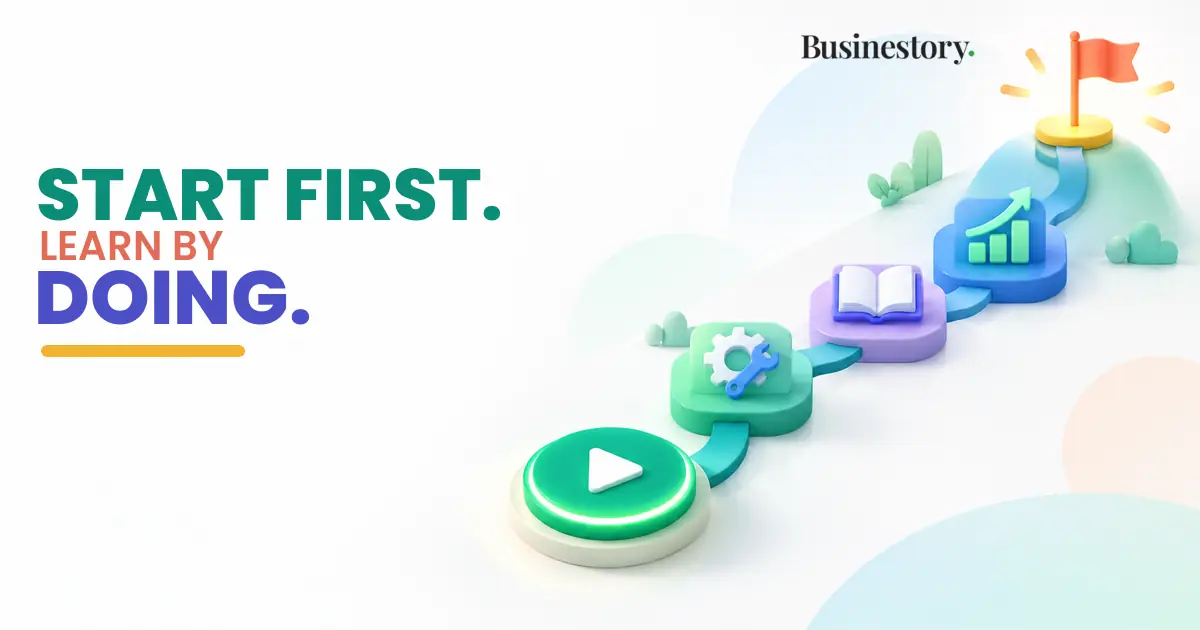
Many people dream about starting an online business. They see others building websites, creating content, selling products, or working from home and wonder if they can do the same.
But then fear appears.
“What if I don’t know enough?”
“What if I fail?”
“What if experienced people are already too far ahead?”
These thoughts stop many beginners before they even begin.
The truth is simple: most people who start an online business have little or no experience in the beginning. Experience usually comes later, not before starting.
You do not become experienced first and then begin. In most cases, people begin first and slowly gain experience along the way.
That does not mean success is easy or guaranteed. It simply means that being a beginner is normal. Everyone starts somewhere.
Before starting, it helps to understand how online businesses actually work.
Why Beginners Feel So Much Fear
Starting something new naturally creates uncertainty.
When people think about online business, they often imagine successful creators, business owners, or marketers who already know what they are doing. This comparison can make beginners feel small and unprepared.
The internet can also make things look more difficult than they really are. There are endless videos, courses, strategies, and opinions. A beginner may feel like they need to understand everything before taking the first step.
This creates pressure.
Some people spend months watching tutorials without doing anything because they are afraid of making mistakes. They believe they must become “ready” before starting.
But readiness is often misunderstood.
Nobody feels completely ready in the beginning.
Even experienced business owners were once confused beginners trying to understand basic things.
Most People Start Without Experience
Think about learning to ride a bicycle.
Nobody waits until they become an expert before trying. They learn by practicing, making mistakes, losing balance, and trying again.
Online business works in a similar way.
Most successful people did not start with perfect knowledge. Many of them had no experience with websites, writing, marketing, or selling when they began.
What they did have was willingness to learn.
Some started with poor skills.
Some made simple mistakes.
Some wasted time on the wrong ideas.
Some felt embarrassed by their first work.
But they improved because they kept moving forward.
Experience is usually the result of action, not the starting point.
Waiting to Become an “Expert” Can Delay Progress
Many beginners believe they need one more course, one more book, or one more month of preparation.
Learning is important, but too much preparation without action can become another form of fear.
A person can spend years collecting information and still feel unprepared.
Why?
Because confidence rarely comes from thinking alone. It grows through doing.
For example, someone may study communication skills for months. But real improvement often begins when they actually talk to people, write content, answer questions, or create something publicly.
The same thing happens in online business.
You learn certain basics first, but deeper understanding develops while working on real tasks.
You cannot fully learn swimming by only reading about water.
At some point, you must enter the pool.
Experience Is Built Slowly Through Action
Many beginners imagine experience as something huge and difficult. But experience usually grows through small repeated actions.
For example:
- Publishing your first piece of content
- Creating a simple website
- Learning how to solve a small problem
- Writing your first email
- Talking to your first customer
- Fixing a mistake
- Improving something little by little
These actions may look small, but they teach important lessons.
After a few weeks, you start noticing patterns.
After a few months, tasks that once felt confusing become easier.
This gradual improvement is how real experience is built.
Nobody wakes up one day with complete knowledge.
Growth is usually slow, practical, and imperfect.
You also do not need advanced skills before getting started.
Learning While Doing Is More Powerful
Many beginners try to learn everything before starting because they want to avoid mistakes.
But mistakes are part of learning.
In fact, some lessons only become clear after taking action.
For example, a beginner may read about creating content. But once they actually start creating, they begin understanding real problems:
- How difficult consistency can feel
- How to improve clarity
- How people respond
- How to organize ideas
- How to stay patient
These lessons become meaningful because they come from real experience.
Learning while doing also helps information stay in your memory better. Practical learning often teaches faster than endless theory.
This does not mean you should ignore education. Learning from others is useful. But learning becomes stronger when combined with action.
A balance between learning and doing is usually healthier than waiting endlessly for perfection.
You Do Not Need to Know Everything
One common beginner mistake is believing they must understand the entire online business world before starting.
That is impossible.
The internet changes constantly. Even experienced people continue learning new things every year.
Instead of trying to master everything, focus on learning the next small step.
For example:
- Learn how to create something simple
- Learn how to improve communication
- Learn how to stay organized
- Learn how to solve one problem at a time
Progress becomes easier when you stop trying to know everything immediately.
Small understanding grows into larger understanding over time.
Fear of Failure Stops Many People
One major reason people avoid starting is fear of failure.
They worry about wasting time, looking foolish, or not succeeding quickly.
This fear is understandable. Nobody enjoys failure.
But beginners often misunderstand failure.
Failure does not always mean losing completely. Sometimes it simply means learning what does not work.
A small mistake today may prevent a larger mistake later.
Many successful people improved because early attempts taught them valuable lessons.
Beginners sometimes think experienced people never struggled. In reality, most experienced people have already gone through confusion, mistakes, slow growth, and self-doubt.
The difference is that they continued learning instead of quitting immediately.
Small Progress Matters More Than Perfect Starts
A perfect beginning is not required.
Many people delay action because they want everything to look professional from day one.
But early work is rarely perfect.
The first version of anything usually improves later.
A simple start with steady improvement is often better than endless waiting.
Small progress may feel unimportant in the moment, but repeated effort creates long-term growth.
Even learning one useful thing each day can slowly build confidence and skill.
Consistency matters more than perfection.
Confidence Usually Comes After Starting
Many beginners wait to feel confident before taking action.
But confidence often works in the opposite direction.
Action creates confidence.
When you complete small tasks repeatedly, fear slowly becomes smaller.
You realize that mistakes are survivable.
You learn that confusion is temporary.
You discover that improvement is possible.
This change does not happen overnight. But each small action makes future actions easier.
Confidence is often built through evidence from your own experience, not from thinking positively.
Comparing Yourself to Others Can Be Harmful
The internet makes comparison very easy.
Beginners often compare themselves to people who have spent years building skills and experience.
This creates discouragement.
But comparing your beginning to someone else’s middle or advanced stage is unfair.
Everyone starts with limited knowledge.
Instead of focusing on how far others are ahead, focus on whether you are improving little by little.
Online business is usually a long journey, not a quick race.
Patience becomes important.
It Is Normal to Feel Uncertain
Many beginners think uncertainty means they are making the wrong choice.
But uncertainty is part of almost every new challenge.
Even experienced people sometimes feel unsure when trying new ideas.
You do not need complete certainty to begin learning.
You only need enough willingness to take the next small step.
Over time, clarity grows through action and experience.
Many beginners fail because they wait too long before taking action.
Final Thoughts
Yes, you can start an online business without experience.
In fact, that is how most people begin.
Experience is not something people magically receive before starting. It is something they slowly build through action, practice, mistakes, and learning.
You do not need to become a complete expert before taking your first step.
You only need patience, willingness to learn, and realistic expectations.
The beginning may feel uncomfortable. You may feel confused at times. You may make mistakes.
That is normal.
Every experienced person was once a beginner who did not know everything.
The important thing is not having perfect knowledge on day one. The important thing is continuing to learn and improve step by step.
You do not need experience to start, but you need patience and willingness to learn over time.