
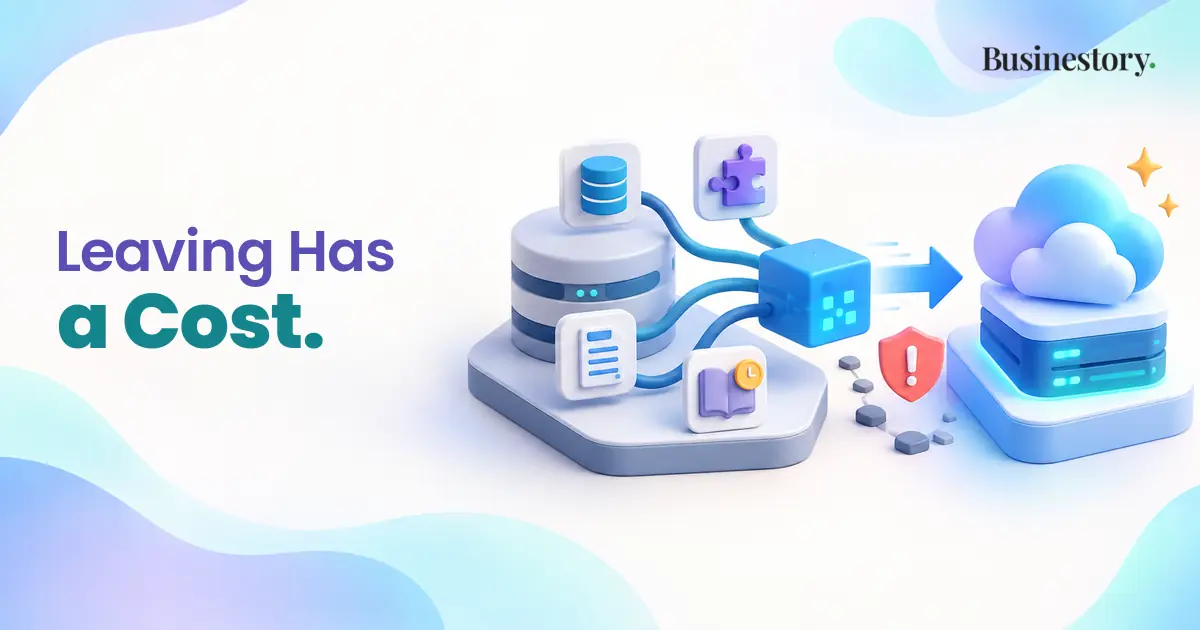
Two online products may offer similar features, solve the same problem, and charge similar prices. Yet a customer may find one much harder to replace. The reason is often everything the customer has built around it. This is where switching costs matter.
What Are Switching Costs?
Switching costs are the money, time, effort, learning, risk, or inconvenience involved when a customer moves from one provider to another. A cancellation fee is one example, but switching cost does not always mean a financial charge.
Imagine a business replacing its project-management software. Ending the subscription may take one minute, but completing the move may take weeks.
The business may need to export data, learn a new interface, rebuild workflows, reconnect integrations, retrain its team, recreate templates, and move years of customer history. People must change habits, and something could break during the move.
All of that is part of the switching cost.
Why Switching Costs Influence Customer Decisions
A customer does not compare products using price and features alone. The customer also considers what changing will require.
Suppose a competing tool costs ₹500 less each month. If moving takes 40 staff hours, risks lost data, and interrupts work, it may not feel cheaper.
This can improve retention and give the provider an advantage. Competitors must offer enough extra value to justify the trouble of moving.
However, a customer staying is not proof of satisfaction. Retention numbers show who stayed, but not why.
A customer can stay because the product continues to create useful value. Another customer can stay because leaving has become unnecessarily difficult. These situations may look identical in a report, but they are not the same.
The first customer has a positive reason to continue. The second may feel trapped and leave when a practical escape appears. A business should therefore understand the reasons behind retention, not only the number. See customer acquisition versus retention for the broader topic.
Understanding why customers stay is just as important as understanding how they were acquired.
Accumulated Value Creates a Healthy Reason to Stay
Some products become more useful with continued use. The customer builds data, history, workflows, reports, templates, integrations, settings, and knowledge around them. This is “accumulated value.”
Imagine a company that has used the same software for years. It contains customer records, transactions, customised reports, reusable documents, and connections to accounting, email, and payment tools.
Changing providers requires exporting and checking data, rebuilding reports, reconnecting tools, testing the setup, and retraining staff. Employees may work more slowly while learning.
A slightly cheaper competitor may therefore be unattractive. The current product includes everything the business has built inside and around it.
This is healthy when accumulated work keeps helping the customer. The customer is not blocked from leaving; staying preserves real usefulness.
The Psychology of Staying With Something Familiar
People may avoid switching when the expected improvement feels smaller than the effort and uncertainty involved. This can be a reasonable response to risk.
The customer knows how the present product behaves. A new one may promise better results, but a failed migration could affect customers, payments, or deadlines.
Habit is also a small switching cost. Familiar menus, shortcuts, and processes require less mental effort. Easy actions may demand attention in a new tool, adding friction without making change impossible.
Useful Switching Costs Versus Artificial Lock-In
An online business should not confuse useful switching costs with artificial lock-in.
Artificial lock-in means making exit difficult without creating corresponding customer value. Examples include deliberately complicated cancellation, hidden data-export options, unreasonable exit penalties, or making customer information unnecessarily difficult to move.
Such barriers may improve short-term retention numbers but damage trust and reputation. Trapped customers may complain, reduce usage, or leave when a competitor provides a migration path.
Ethical switching costs work differently. A business earns them through reliable service, useful customer history, personalised settings, reusable templates, valuable integrations, consistent processes, strong documentation, and knowledge built through serving the customer over time.
A freelancer may remember a client’s brand rules, file formats, approval process, and communication style. This makes future projects easier. A service business may keep records that stop customers from repeatedly explaining their needs.
A creator platform can save settings, audience insights, archives, and layouts. A design tool may store brand templates. A SaaS product may connect with payment, reporting, and support systems. These create convenience through continuing value. Established workflows can strengthen the model described in how SaaS companies make money.
More Features Are Not Enough
Simply adding more features does not automatically create useful switching costs. A feature matters only when it helps the customer do real work.
A reporting option that nobody uses adds little value. The same option becomes valuable when a business relies on its weekly report to make decisions. A template library becomes meaningful when a freelancer has created reliable templates for repeated client work.
The strongest value develops when the product becomes part of a real workflow. Usage, saved knowledge, and dependable outcomes matter more than a long feature list.
Switching Costs Are Not Network Effects
Switching costs make leaving a product harder or less attractive. Network effects can make a service more valuable as more people use it.
These forces can exist together, but they are not interchangeable. A tool can have high switching costs because it stores important business history even if additional users do not improve it. A communication platform may benefit from network effects because more relevant participants make the service more useful.
When Switching Costs Become a Business Risk
High switching costs do not guarantee permanent retention. They can become dangerous if a business treats trapped customers as loyal customers and stops improving.
Frustration can quietly build. Customers may tolerate poor support or rising prices for a while because moving feels difficult. But this also creates an opportunity for competitors.
A new competitor does not always need a much better product. Sometimes it only needs to reduce the cost of moving. It can offer simple data imports, migration tools, personal onboarding help, compatible file formats, or a service that rebuilds the customer’s setup.
For freelancers, this might mean reviewing the client’s existing files and creating a smooth handover. For service businesses, it could mean importing records and documenting the new process. For creator platforms and online tools, it may mean one-click imports, familiar templates, and connections to tools customers already use.
When the barrier falls, unhappy customers who once appeared loyal may leave quickly.
Switching costs and network effects can both strengthen a business, but they work in different ways.
A Simple Switching Cost Audit
Ask these questions about your product or service:
- What value does the customer accumulate over time?
- What would the customer need to rebuild after leaving?
- Is that difficulty caused by genuine value or artificial friction?
- Can customers export their information reasonably?
- Does staying continue to benefit them?
- Could a competitor make switching dramatically easier?
The answers reveal whether retention is supported by value, inconvenience, or both.
Common Mistakes to Avoid
One mistake is treating lock-in as loyalty. Another is hiding cancellation options and assuming customers will forget their frustration.
Businesses may also assume that high switching costs guarantee permanent retention. They may stop improving the product, allow support quality to fall, or raise prices without protecting customer value.
Creating dependency without providing enough ongoing benefit is especially risky. It gives competitors a clear message: “We will help you escape.”
Monitor why customers stay. Use feedback, support conversations, product usage, renewal reasons, and cancellation comments to understand whether customers continue because the service remains useful.
Switching costs can be a real competitive advantage, but only when handled responsibly. The strongest switching cost is not making exit painful. It is making the ongoing value difficult to replace.
The strongest businesses do not need to trap customers. They become difficult to replace because useful history, workflows, knowledge, and trust accumulate over time.