
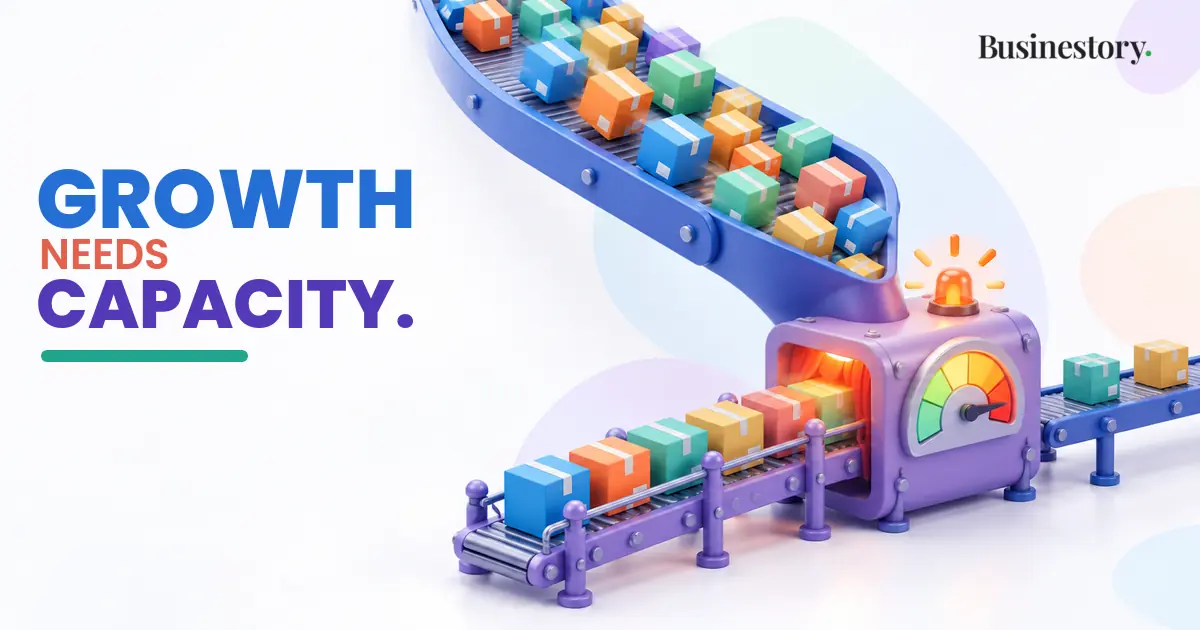
More customers and more sales must always be good for a business, right?
When orders rise or more people ask for a service, it can look like clear proof that the business is succeeding.
However, growth can create problems when customers arrive faster than the business can serve them properly. Sales may rise while delivery time, quality, and customer relationships become worse.
The problem is not growth itself. The problem is growth without enough capacity or preparation.
Growth Creates More Than Revenue
Growth does not only increase money coming into a business. It can also increase workload, expenses, coordination, customer support, delivery pressure, and risk.
Ten new clients may also mean ten conversations, ten deadlines, ten invoices, and many revision requests. More product customers can create more access problems, refund requests, and questions.
Every sale creates work somewhere. If that extra work is ignored, impressive sales numbers can hide a weakening business.
Understand Your Current Capacity
Capacity simply means how much work a business can handle properly with its current time, people, tools, and systems.
A freelancer may have capacity for four design projects each month. A one-person product business may be able to answer thirty support messages a day.
Demand can continue growing after the business reaches its capacity limit. This is when trouble starts. The owner accepts more work, but there is no extra time or reliable process for handling it.
The results may include too many client projects at once, delayed deliveries, missed invoices, slow refunds, inconsistent quality, lost customer information, and more support messages than one person can answer.
Working longer may help briefly, but it is not a dependable growth system.
Why Growth Numbers Feel So Powerful
Larger sales numbers, follower counts, customer totals, and order volumes can feel like proof of success. They are visible and easy to compare. This can encourage an owner to keep promoting, even when the business is becoming less healthy underneath.
Positive numbers naturally attract attention. The danger is treating one number as the complete picture.
A business with rising revenue but falling quality and shrinking profit is not growing well. Useful measures include profit, on-time delivery, customer satisfaction, and workload.
Revenue Growth Is Not Always Profit Growth
Revenue is the total money earned before expenses. Profit is what remains after the related costs are paid. Therefore, more revenue does not automatically create more profit.
Additional sales can bring payment fees, advertising expenses, platform charges, contractor payments, new software costs, refunds, and extra customer-service work.
Imagine a $20 product leaves only $2 after direct costs. Another 100 sales produce only $200 before new support or administrative costs. Extra volume may create more pressure than value.
This is why a low-margin offer can become more difficult as volume increases. Small problems repeated hundreds of times become large problems.
Find the Operational Bottleneck
An operational bottleneck is one slow part that limits the speed of the whole business.
For example, every project may wait for one person’s approval. A creator may manually send every file, while a service owner answers every message and prepares every invoice.
The first question should not be, “How can I get more customers?” It should be, “Which step is already delaying the work?”
Hiring someone or buying another tool is not always the first solution. If the process is unclear, more people or tools can add confusion. An unclear process often becomes a bigger unclear process when volume increases.
First simplify the work. Then document important steps and remove unnecessary approvals. A simple weekly workflow can keep recurring work from being forgotten.
Customer Experience Can Decline Quietly
Fast growth can look successful from the sales page while feeling disappointing to customers.
Replies become slower. Work is rushed. Small details are missed. One customer receives excellent support while another gets an incomplete answer. Delivery dates keep changing.
These problems reduce trust. Customers judge a business by what they receive, not its order count. Strong sales today may weaken repeat business and referrals tomorrow.
Growth can also create temporary cash pressure. Contractors, advertising, software, or product expenses may need to be paid before customer money is fully received. The business can be busy and still struggle to meet short-term payments. This is one reason growth plans should consider timing as well as total income.
Slowing Down Can Be a Responsible Choice
When capacity is full, a business may need to limit new orders, create a waiting list, increase lead times, reduce custom work, or temporarily pause promotion.
This is not failure. A short slowdown can protect quality while the owner improves the system.
Capacity can increase without longer hours. Standardised offers, clear boundaries, templates, SOPs, and better scheduling make repeated work faster and more consistent.
Practical Examples
Freelancer: A designer should not accept eight projects if only four can be delivered well. A waiting list, fixed packages, revision limits, and templates can protect quality.
Digital product creator: A course creator facing repeated access questions should improve instructions, delivery emails, and saved answers before buying more advertisements.
Blogger: Higher traffic creates more updates and technical demands. A realistic content calendar helps the blogger avoid an unsustainable publishing frequency.
Service business: If one owner approves every agency task, clear approval rules and assigned responsibilities can remove that bottleneck.
A Simple Growth Readiness Test
Before trying to attract more customers, ask:
- Can I deliver current orders on time?
- Do I know which task is currently slowing the business down?
- Do I understand the profit from each additional sale?
- Can common customer questions be handled consistently?
- Are important processes written down?
- What happens if orders suddenly double?
An uncomfortable answer is useful information. It shows where preparation is needed.
Prepare for Responsible Growth Step by Step
1. Review current delivery. Check delays, complaints, refunds, unfinished tasks, and repeated errors. These reveal pressure points.
2. Identify the first bottleneck. Follow one order from payment to completion. Notice where it waits, gets confused, or requires too much manual work.
3. Understand each sale. Estimate the money, time, fees, support, and delivery effort added by one more customer. Review your pricing approach if higher volume produces little profit.
4. Simplify the offer. Reduce unnecessary options, custom requests, approvals, and revision rounds. Clear offers are easier to deliver consistently.
5. Document repeated work. Create short checklists, templates, and SOPs for essential tasks. Start with the bottleneck instead of documenting everything.
6. Test a small increase. Add customers gradually and observe delivery time, quality, workload, support volume, and costs.
7. Adjust before promoting again. Fix the next limitation, then continue growing at a pace the business can support.
Common Growth Mistakes
Beginners often chase new sales before fixing delivery problems. Some add tools instead of repairing unclear processes. Others accept every customer, lower prices to increase volume, or measure growth only by revenue.
Each mistake increases pressure without necessarily strengthening the business. More activity is not the same as more progress.
Healthy growth gradually improves revenue while keeping profit, delivery quality, customer experience, workload, and costs manageable. Uncontrolled growth increases demand faster than the business can adapt.
A small online business does not need to reject growth. It needs to become ready for it. By finding the first bottleneck, protecting quality, and improving capacity step by step, beginners can build growth that lasts instead of growth that creates damage.
Growth is useful only when the business can carry it. A smaller business with healthy margins, reliable delivery, and manageable systems may be stronger than a larger business struggling to keep up.